Watercolor St. Patrick Gnome Clipart Review
As a professional embroidery designer and product reviewer, I approach every new asset with a critical eye toward production reality. When evaluating the Watercolor ST. Patrick Gnome Clipart for potential use in commercial and personal projects, my primary concern is always translatability. A beautiful digital illustration does not automatically equate to a successful machine embroidery design. The transition from screen to stitch requires careful consideration of density, fabric interaction, and visual hierarchy. After analyzing this specific gnome artwork, I see significant potential for holiday merchandise, but only if applied with technical precision.
First Impressions and Visual Personality
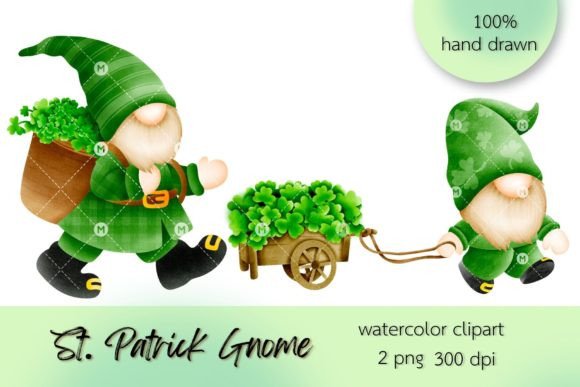
The initial appeal of this Watercolor ST. Patrick Gnome Clipart lies in its soft, organic aesthetic. Unlike rigid vector art, the watercolor style suggests a gentle, hand-painted quality that resonates deeply with customers seeking cozy, handmade vibes. For an Etsy seller or boutique owner, this mood is invaluable during the spring season. The gnome’s expression and the muted green palette evoke nostalgia rather than aggressive holiday marketing, making it suitable for products intended to be kept year-round rather than discarded after March 17th.
However, as illustrations go, watercolor presents unique challenges for digitizing. The soft edges and color gradients must be interpreted carefully. If you are converting this clipart into an embroidery file yourself, or purchasing a pre-digitized version based on it, you must ensure the satin stitch borders are clean enough to define the shape without looking cartoonish. The charm of this design relies on maintaining that painterly illusion through strategic fill stitch placement and thread color blending.
Real-World Application: The Spring Tote Bag Test
To truly evaluate this asset, I mentally placed it onto a natural canvas tote bag, a staple for craft business owners and spring markets. In this scenario, the Watercolor ST. Patrick Gnome Clipart serves as a central focal point. Canvas provides an excellent, stable foundation for the detailed shading often required to replicate watercolor effects in thread. The texture of the canvas complements the rustic nature of the gnome, creating a cohesive finished product.
For custom apparel, specifically sweatshirt embroidery, the design offers a different set of opportunities. Sweatshirts are high-value items for small shop products. The gnome’s compact shape works well centered on the chest or scaled down for a pocket-sized accent. However, because fleece has a pile, the design needs sufficient underlay to prevent the stitches from sinking. I envision this working beautifully as a personalized gift when paired with a family name in a simple running stitch below the gnome. The combination of the whimsical illustration and personalized text increases buyer engagement and perceived value significantly.
Technical Considerations for Stitching Success
While the aesthetic is strong, practical execution requires vigilance. Watercolor styles often tempt digitizers to increase stitch density to capture color variation. This can lead to bulletproof patches that pucker thin fabrics. When using this Watercolor ST. Patrick Gnome Clipart as a base for embroidery, verify the stitch density before committing to a full production run. If the design feels too heavy, consider using it as an applique design instead. A fabric appliqué can provide the base color and texture, with the embroidery merely outlining details and adding highlights. This reduces stitch count and preserves the drape of garments like baby clothes or lightweight tea towels.
Hoop size selection is equally critical. This gnome likely has intricate facial details or hat textures that will be lost in a 4x4 hoop. I strongly recommend testing the design at your intended final size. If details blur at smaller scales, do not force it. Instead, reserve the full-detail version for larger projects like pillow covers or blankets, and seek or create a simplified silhouette version for caps or baby embroidery. Caps present additional curvature challenges; ensure the design’s vertical height fits within your cap frame’s safe zone to avoid distortion.
Fabric Compatibility and Stabilizer Strategy
The success of any holiday embroidery project hinges on matching the design to the substrate. For dark fabrics, the light greens and skin tones typical of St. Patrick’s themes require high contrast to remain visible. Test thread colors against your specific fabric swatch before stitching. Sometimes, shifting to a slightly brighter or more saturated green thread is necessary to compensate for the absorption of dark textiles. Conversely, on white or cream fabrics, ensure the stabilizer prevents show-through, especially if the design uses dense fill stitches to mimic watercolor washes.
Stabilizer choice cannot be an afterthought. For stretchy knits used in custom apparel, a cut-away stabilizer is non-negotiable to maintain registration between the complex color blocks of the watercolor effect. For woven items like kitchen towels or aprons, a tear-away may suffice, but always test first. Remember that watercolor-style embroidery often involves multiple needle penetrations in small areas; inadequate stabilization will result in misalignment that ruins the professional finish your customers expect.
Commercial Viability and Brand Consistency
For creative entrepreneurs and digital product sellers, this clipart represents more than just a single design; it is a brand asset. The soft watercolor style aligns with current market trends favoring cottagecore and gentle aesthetics over bold graphics. When listing finished products, use printable mockups that accurately reflect the stitched texture. Customers need to understand they are buying embroidery, not a printed image. High-quality photos of the actual stitched Watercolor ST. Patrick Gnome Clipart build trust far better than digital renders alone.
If you plan to sell the digital embroidery file itself, transparency is key. Clearly state the tested sizes, recommended fabrics, and stabilizer requirements in your listing. Commercial embroidery buyers appreciate honesty about limitations. Specify whether the file includes multiple sizes or just one. Confirm your licensing terms explicitly; can buyers use this for mass-produced items or only limited handmade runs? Clear communication prevents disputes and establishes your reputation as a reliable source for design assets.
Essential Pre-Production Checklist
Before listing any item featuring this design or selling the file, adhere to this practical workflow:
- Test Stitch Always: Never skip the test sew on the exact fabric and stabilizer combination you intend to use for the final product.
- Verify Licensing: Double-check whether the original Watercolor ST. Patrick Gnome Clipart license permits commercial embroidery sales or derivative digital files.
- Check Small Details: Inspect the digitized file for tiny satin stitches that may fray or disappear after washing. Adjust minimum stitch lengths if necessary.
- Evaluate Washability: If the item is a baby product or kitchen towel, wash the test sample aggressively. Watercolor effects using rayon thread may bleed or lose sheen; polyester might be safer for high-wear items.
- Mockup Accuracy: Ensure your Etsy listings or portfolio images represent the true scale and color of the embroidery, not just the flat digital illustration.
- Thread Color Mapping: Document your exact thread colors used in testing so you can replicate the look consistently across future batches or share accurate charts with file buyers.
Ultimately, the Watercolor ST. Patrick Gnome Clipart is a versatile asset for the thoughtful maker. Its strength lies in its emotional resonance and seasonal relevance, but its success depends entirely on technical competence. By respecting the interplay between digital art and physical thread, you can transform this charming illustration into profitable, professional-grade embroidery that delights customers and strengthens your brand. Approach it with patience, test rigorously, and let the quality of your craftsmanship elevate the original artwork into something tangible and enduring.