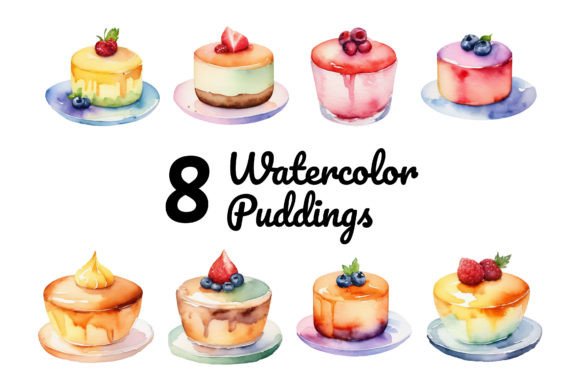
Watercolor Puddings Clipart for Embroidery
As a professional embroidery designer and product reviewer, I approach every new digital asset with a specific question: will this actually stitch out beautifully on fabric? When evaluating the Watercolor Puddings Clipart Illustration, my first impression is one of soft nostalgia and whimsical charm. The aesthetic is undeniably sweet, evoking feelings of comfort food, vintage bakeries, and cozy kitchen vibes. However, translating a raster illustration into a machine embroidery design requires more than just liking the picture; it demands a critical eye for stitchability, fabric compatibility, and commercial viability.
For Etsy sellers, craft business owners, and makers, this collection holds significant potential, but only if applied correctly. The watercolor style implies soft edges and blended colors, which presents unique challenges and opportunities in digitizing. Unlike crisp vector art, these illustrations rely on texture and shading. As a reviewer, I see this as an excellent candidate for specific niche products, provided the digitizer has respected the integrity of the original artwork through appropriate stitch types.
Evaluating Stitch Translation and Visual Mood
The mood created by Watercolor Puddings Clipart Illustration is gentle and inviting. In a real-world scenario, imagine preparing a custom embroidered tote bag for a boutique bakery or a personalized gift for a dessert lover. The visual personality here is not bold or corporate; it is artisanal and handmade. This distinction matters immensely when selecting thread colors and stabilizers. If you are using this for sweatshirt embroidery or baby clothes, the softness of the design must be matched by the tactile quality of the finished product.
When reviewing this illustration for conversion into an embroidery file, I look for how the watercolor gradients are interpreted. Are they rendered with dense satin stitch borders that might pucker lightweight fabric? Or do they utilize lighter fill stitch patterns that mimic the brushwork? A successful translation preserves the artistic intent without creating a bulletproof patch of thread. For commercial embroidery projects, clarity is key. Customers need to recognize the pudding shape instantly, even from a distance. If the details are too muddy or the stitch density is too high, the design loses its appeal on textured fabrics like linen tea towels or canvas aprons.
Real-World Application: The Custom Tote Bag Test
To truly judge the utility of Watercolor Puddings Clipart Illustration, let us consider a practical case study: creating a line of reusable market bags for a holiday craft fair. Tote bag design requires durability and visual impact. Canvas is a forgiving fabric, but it has a distinct weave that can swallow tiny details.
In this scenario, I would evaluate whether the illustration’s scale works within a standard 5x7 hoop size. Watercolor styles often benefit from slightly larger formats to allow the shading nuances to show. If the design is too small, the blending stitches may become indistinguishable blobs. For a tote bag, I would also check the contrast against natural or cream-colored canvas. Since watercolor puddings often feature warm browns, creams, and soft reds, testing thread color contrast is non-negotiable. You want the dessert to pop off the bag, not blend into the background. Furthermore, considering the end-use, the stitch density must be balanced. A bag gets thrown around; overly dense stitching can cause the fabric to warp or tear over time, while sparse stitching might snag.
Navigating Fabric Limitations and Hoop Constraints
While these illustrations are versatile, they require careful placement. There are specific environments where Watercolor Puddings Clipart Illustration should be used with caution. Stretchy fabrics, such as jersey knits used in baby embroidery or t-shirts, demand exceptional stabilization. The organic shapes of watercolor art often lack the structural rigidity of geometric designs, making them prone to distortion if the stabilizer is inadequate.
Dark fabrics present another hurdle. Watercolor aesthetics rely on light passing through layers of color to create depth. On black or navy fabric, this effect is lost unless you employ a white underlay or choose a version of the design specifically digitized for dark backgrounds. Similarly, curved surfaces like caps are generally ill-suited for this type of illustration. The flat, painterly nature of the design fights against the curvature of a hat, often resulting in registration issues where the outline separates from the fill stitch.
Small hoop sizes also warrant scrutiny. If you intend to use this as a decorative accent on a cuff or collar, verify that the smallest details remain legible at reduced scales. Tiny lettering or intricate garnish details in the pudding illustration may need to be simplified or removed entirely to prevent needle breaks and thread bunching. Always inspect small details in your embroidery software before committing to a stitch-out.
Commercial Value and Customer Perception
For creative entrepreneurs and digital product sellers, the value of Watercolor Puddings Clipart Illustration extends beyond a single project. It contributes to brand consistency and buyer engagement. In the saturated market of handmade products, cohesive aesthetics build trust. Using a unified style of illustrations across your shop—from printable mockups to actual finished products—signals professionalism.
However, customer trust relies on accurate representation. If you are selling digital embroidery files derived from this clipart, your listing photos must reflect reality. Do not use the original digital illustration as the sole preview. Buyers need to see a stitched sample to understand how the watercolor effect translates to thread. This transparency reduces returns and negative reviews. For those selling physical items like pillow covers or nursery decor, the "giftability" factor is high with this theme, but only if the execution feels premium. Sloppy trimming, visible jump stitches, or poor color matching will undermine the perceived value of the handmade product.
Essential Designer Notes for Success
Before you load Watercolor Puddings Clipart Illustration into your machine for a client project or shop inventory, adhere to these practical guidelines:
- Test on Scrap Fabric First: Never assume a design will work perfectly out of the box. Stitch a test run on the exact fabric and stabilizer combination you plan to use for the final product.
- Verify Licensing: Confirm whether your purchase includes commercial rights for both physical products and digital resale. Licensing terms vary significantly between designers.
- Check Thread Color Contrast: View your thread palette in natural lighting. Watercolor shades can look different on screen versus in real life. Ensure sufficient contrast for visibility.
- Review Stitch Density: Use your embroidery software to analyze density maps. Adjust pull compensation if necessary to prevent gaps or puckering on your chosen material.
- Mockup Realistically: When creating listings, use realistic mockups that account for fabric texture. Avoid placing a flat digital image on a wrinkled shirt template without adjusting for distortion.
- Confirm File Compatibility: Ensure the embroidery file format matches your machine’s requirements. Check hoop size limitations before purchasing or digitizing.
- Wash Test for Durability: If producing tea towels or baby items, wash and dry the test sample to ensure the watercolor shading holds up and threads do not bleed or shrink excessively.
Ultimately, Watercolor Puddings Clipart Illustration offers a delightful foundation for embroidery projects ranging from personalized gifts to boutique merchandise. Its success lies not just in the beauty of the original art, but in the thoughtful technical decisions made during digitizing and production. By respecting the interplay between digital illustration and physical thread, makers can transform these sweet images into tangible, high-quality goods that resonate with customers and stand the test of time.