Watercolor Floral Typewriter Clipart PNG Review
As an embroidery designer who has digitized and stitched out countless vintage-themed assets, I approach every new graphic with a specific question: will this actually translate to thread? When evaluating the Watercolor Floral Typewriter Clipart PNG for potential use in machine embroidery design projects, my focus shifts immediately from digital aesthetics to physical feasibility. This illustration carries a distinct nostalgic mood, blending mechanical precision with organic softness. For small business owners and Etsy sellers, this duality is valuable, but it also presents unique challenges when converting pixels into stitches. The visual personality here suggests a romanticized view of craftsmanship, making it ideal for personalized gifts and boutique branding, provided the technical execution matches the artistic intent.
Translating Watercolor Aesthetics to Thread
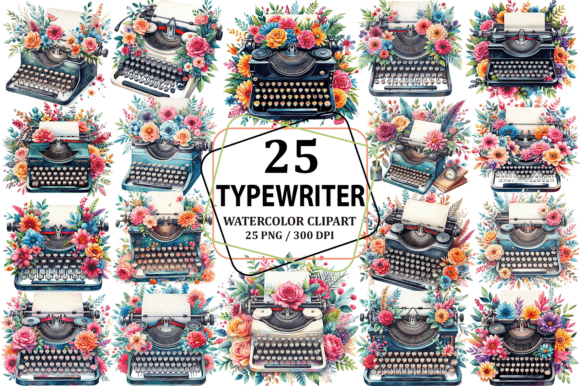
The first impression of this Watercolor Floral Typewriter Clipart PNG is one of delicate balance. The typewriter provides a structured, linear foundation, while the florals introduce fluidity and movement. In a digital format, watercolor effects rely on transparency and color blending. In embroidery, we must replicate this through stitch density and thread color layering. As a reviewer, I look for clear separation between the mechanical elements and the botanical accents. If the original illustration has muddy edges where the flowers meet the metal casing, digitizing becomes difficult. You risk losing definition, resulting in a blob rather than a detailed machine embroidery design.
For this specific style, I assess whether the floral elements are distinct enough to serve as applique design components or if they require complex fill stitch gradients. The typewriter keys and carriage return lever need crisp running stitch outlines to maintain their vintage charm. Without that clarity, the finished product loses its retro appeal and looks generic. The success of this design relies entirely on preserving the contrast between the hard lines of the machine and the soft rendering of the blooms.
Real-World Application: Stitching a Custom Tote Bag
To truly judge the viability of this asset, I mentally placed it onto a canvas tote bag project intended for a writer’s retreat gift set. Tote bags are a staple for any craft business, but canvas texture can swallow fine details. Using the Watercolor Floral Typewriter Clipart PNG in this scenario requires strategic planning. The natural weave of the fabric demands a slightly heavier stitch weight than what you might use on a smooth cotton lawn.
In this real-life application, I would avoid placing tiny text directly over the floral areas. Instead, I would utilize the negative space around the typewriter for personalization. The watercolor effect translates best when using variegated thread colors for the flowers and solid matte threads for the typewriter body. This creates tactile contrast that mimics the visual contrast of the original illustration. For a sweatshirt embroidery project, however, I would be more cautious. Fleece backing and stretchy knit fabrics require significant stabilizer, which can distort the precise geometry of a typewriter. If using this for custom apparel, testing on scrap fabric is non-negotiable to ensure the keys remain aligned and the petals do not pucker.
Navigating Fabric Limitations and Hoop Constraints
While versatile, this design type demands respect for material limitations. Dark fabrics pose a significant challenge for watercolor-style illustrations. Watercolor implies light passing through pigment; on black or navy fabric, you lose that luminosity unless you stitch a white underlay base first. This increases stitch count and density significantly. For baby embroidery or lightweight summer garments, this added density might make the garment stiff and uncomfortable. Always check the final stitch density before committing to delicate substrates.
Curved surfaces like caps are another area requiring careful judgment. The horizontal line of the typewriter paper guide can appear warped on a curved brim. If you plan to use this Watercolor Floral Typewriter Clipart PNG for hat embroidery, consider isolating just the floral cluster or angling the typewriter to accommodate the curve. Small hoop sizes also limit your ability to capture the full scene. Cropping tightly on the typewriter keys with a single bloom often yields a better embroidered patch than shrinking the entire composition until details vanish.
Commercial Value and Brand Consistency
For Etsy sellers and handmade shop owners, visual appeal drives sales, but consistency builds trust. This illustration offers strong potential for cohesive collections. It bridges the gap between cottagecore aesthetics and dark academia, appealing to diverse buyer demographics. However, professionalism comes from accurate representation. Your printable mockup must reflect how the embroidery actually looks, not just how the digital file appears. Customers feel betrayed when they receive a dense, heavy stitch-out that looks nothing like the airy watercolor preview.
When creating commercial embroidery listings, highlight the specific techniques used to achieve the watercolor look. Mentioning thread colors and stabilizer choices in your product description demonstrates expertise. This transparency increases buyer engagement and reduces returns. Furthermore, ensure you have confirmed licensing before selling finished items or digital embroidery files derived from this clipart. Intellectual property compliance is as critical to your business reputation as stitch quality. Whether used for holiday embroidery cards or year-round boutique merchandise, legal clarity protects your creative enterprise.
Essential Designer Notes for Successful Execution
Before loading this design into your machine, run through this practical checklist to ensure professional results:
- Test on Scrap Fabric First: Never stitch a new design directly onto a final product. Use fabric scraps that match the weight and texture of your intended project to verify tension and registration.
- Check Thread Color Contrast: Watercolor designs fail without tonal variation. Select thread colors that offer distinct shading rather than flat blocks of color to mimic the painted effect.
- Review Stitch Density: Ensure the design is not too dense for your chosen fabric. Adjust pull compensation settings if stitching on stretchy materials to prevent distortion.
- Confirm Hoop Size Compatibility: Verify that the design dimensions fit comfortably within your hoop with adequate margin for stabilization. Resizing can alter stitch properties unexpectedly.
- Inspect Small Details: Zoom in on the digitized file to check for gaps between the typewriter keys and floral stems. Tiny jumps or unconnected paths cause production headaches.
- Use Proper Stabilizer: Match stabilizer weight to fabric stability. Tear-away works for sturdy canvas, while cut-away is essential for knits and apparel to maintain shape after washing.
- Validate Licensing Terms: Read the specific license for this Watercolor Floral Typewriter Clipart PNG. Confirm whether it allows for commercial sale of physical products, digital redistribution, or both.
Evaluating design assets requires looking beyond surface beauty. The Watercolor Floral Typewriter Clipart PNG holds immense promise for makers willing to bridge the gap between digital art and textile reality. By respecting the technical constraints of embroidery and understanding the material interactions, you can transform this charming illustration into a high-value finished product that resonates with customers and stands up to real-world use. Success lies not just in the design itself, but in the thoughtful, experienced hands that bring it to life.