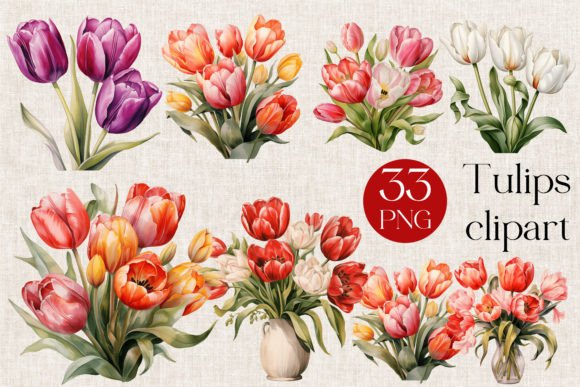
33 Pastel Tulip Watercolor Clipart: Editorial Illustrations
As a digital publisher and blog designer, my first interaction with any new graphic design asset is always critical. When I opened the files for the 33 Pastel Tulip Watercolor Clipart collection, the immediate impression was one of refined softness and editorial elegance. Unlike generic stock vectors that often feel sterile or overly saturated, these illustrations possess a hand-painted authenticity that translates beautifully to screen. The color palette leans into muted lavenders, soft pinks, and creamy yellows, creating a mood that is distinctly feminine yet sophisticated enough for professional content marketing. This is not merely decorative filler; it is a cohesive visual system that signals warmth, approachability, and high-quality curation to readers the moment a page loads.
For publishers operating in lifestyle, gardening, wellness, or creative education niches, this asset solves a specific problem: the need for original-feeling visuals without the cost of custom illustration. The watercolor texture adds a tactile quality to digital screens, bridging the gap between physical artistry and modern web design. It feels intentional rather than accidental, which is crucial for building reader trust and establishing a memorable brand identity.
Elevating Blog Graphics and Featured Images
In my daily workflow, the featured image is the single most important visual hook on a content site. The 33 Pastel Tulip Watercolor Clipart excels here because the individual elements are isolated on transparent backgrounds, allowing for seamless integration into composite designs. When designing a website header or a blog post thumbnail, I can layer these tulips over solid pastel blocks or subtle paper textures to create depth without visual clutter.
The variety within the set—buds, full blooms, stems, and loose petals—allows for dynamic composition. For a spring gardening guide, I might cluster three full blooms in the bottom right corner to frame negative space for headline text. For a wellness newsletter, a single delicate stem provides just enough visual interest to break up white space without competing with the copy. This flexibility supports stronger visual hierarchy, ensuring the eye travels naturally from the graphic to the call-to-action. From an SEO perspective, unique, custom-composed graphics using these assets are far more likely to be pinned and shared than generic photography, directly supporting Pinterest traffic strategies.
Strategic Applications for Digital Products and Lead Magnets
Beyond standard blog posts, this clipart collection proves invaluable for monetization and list-building assets. As creators develop digital products like eBooks, worksheets, or printable planners, consistent branding is essential for perceived value. These illustrations provide that connective tissue across different formats.
- Digital Guides and eBooks: Use the larger floral compositions as chapter dividers or cover accents to soften technical content and make long-form reading feel more inviting.
- Lead Magnets and Checklists: Incorporate smaller bud elements as bullet points or border decorations in PDF downloads to maintain brand consistency from the blog post to the inbox.
- Canva Templates: If you sell templates as a digital download, these watercolor elements add a premium, handmade aesthetic that justifies higher price points in creative marketplaces.
- Social Media Graphics: Create Instagram story frames or Pinterest pin overlays where the organic shapes of the tulips contrast effectively against bold, modern typography.
When used in affiliate marketing content, such as product roundups for home decor or beauty, these illustrations act as neutral but attractive spacers. They prevent the page from looking like a catalog of external links and instead frame affiliate products within your own unique editorial narrative.
Where This Asset Performs Best in Editorial Layouts
Through testing various layouts, I have found that 33 Pastel Tulip Watercolor Clipart performs exceptionally well in specific editorial contexts. Hero images benefit greatly when the flowers are scaled large and cropped, creating an immersive background that doesn't overwhelm foreground text due to the soft color values. Article thumbnails for categories like "Self-Care," "Seasonal Living," or "Creative Business" gain instant recognition when paired with these recurring motifs.
Newsletter headers are another strong use case. Email clients often strip complex formatting, but a well-sized PNG graphic retains its integrity. The pastel tones reproduce reliably across different email platforms, unlike neon colors which can shift unpredictably. Additionally, for small business branding packages or media kits, these illustrations communicate creativity and attention to detail, helping service providers stand out in pitches to potential collaborators.
Navigating Limitations and Contextual Fit
While versatile, this asset requires thoughtful placement. It should be used carefully in highly corporate, fintech, or serious news environments where watercolor florals might undermine authority or appear unprofessional. Similarly, avoid using these detailed illustrations at very small sizes, such as tiny mobile favicons or dense sidebar widgets; the delicate brushwork will blur and look muddy on low-resolution screens.
Contrast is another consideration. Because the palette is inherently light, placing white or pale yellow text directly over these clips without a dark overlay or drop shadow will result in poor readability. Always prioritize accessibility. Furthermore, if your website relies on a strict minimalist grid system, the organic, irregular edges of watercolor art may feel chaotic unless balanced with ample whitespace and structured typography.
Publisher Notes: Technical Workflow and Licensing
Before deploying 33 Pastel Tulip Watercolor Clipart to a live production site, I recommend a rigorous testing protocol. First, verify the commercial license terms explicitly. Ensure you have the rights to use the assets in paid digital products, affiliate content, or client work, as licensing varies significantly across creative marketplaces. Never assume a personal-use license covers monetized blogs.
Technically, watercolor PNGs can be file-size heavy due to complex edge transparency. Always run these images through compression tools like TinyPNG or ShortPixel before uploading. Aim to keep individual clipart elements under 100KB where possible to maintain fast page load speeds, which is vital for both user experience and search rankings. Test the graphics on actual mobile devices, not just browser resizing tools, to ensure the pastel colors don't wash out on bright phone screens.
- Typography Pairing: Test the clipart beside serif fonts for a classic editorial look, sans-serif for modern clarity, and script fonts for invitations. Avoid overly decorative display fonts that compete with the intricate brush details.
- Monochrome Testing: Convert the images to grayscale temporarily to check value contrast. If the image disappears in black and white, it lacks sufficient tonal range for accessible design.
- Layout Preview: Place the asset inside your actual WordPress or Squarespace theme previewer before publishing. Colors can shift depending on your site’s global CSS filters or dark mode settings.
- Brand Consistency: Create a style guide document specifying exactly which hex codes from the clipart match your brand palette. This prevents future designs from drifting visually.
Ultimately, 33 Pastel Tulip Watercolor Clipart is a robust tool for the discerning digital publisher. It offers the organic beauty of traditional media with the functional utility required for modern content marketing. By treating these illustrations as strategic design elements rather than mere decoration, you can elevate your editorial quality, enhance reader engagement, and build a more distinctive, trustworthy online presence. Whether you are crafting a viral Pinterest pin, designing a profitable lead magnet, or simply beautifying a seasonal blog post, this asset delivers professional results that resonate with audiences seeking authenticity in a digital world.